Intermittent fasting (IF) has become one of the most talked-about health trends worldwide. From weight loss to better digestion, people claim countless benefits. But the big question is—does intermittent fasting really work for Indians, considering our food culture, lifestyle, and metabolism? Let’s uncover the truth.
🌿 What is Intermittent Fasting?
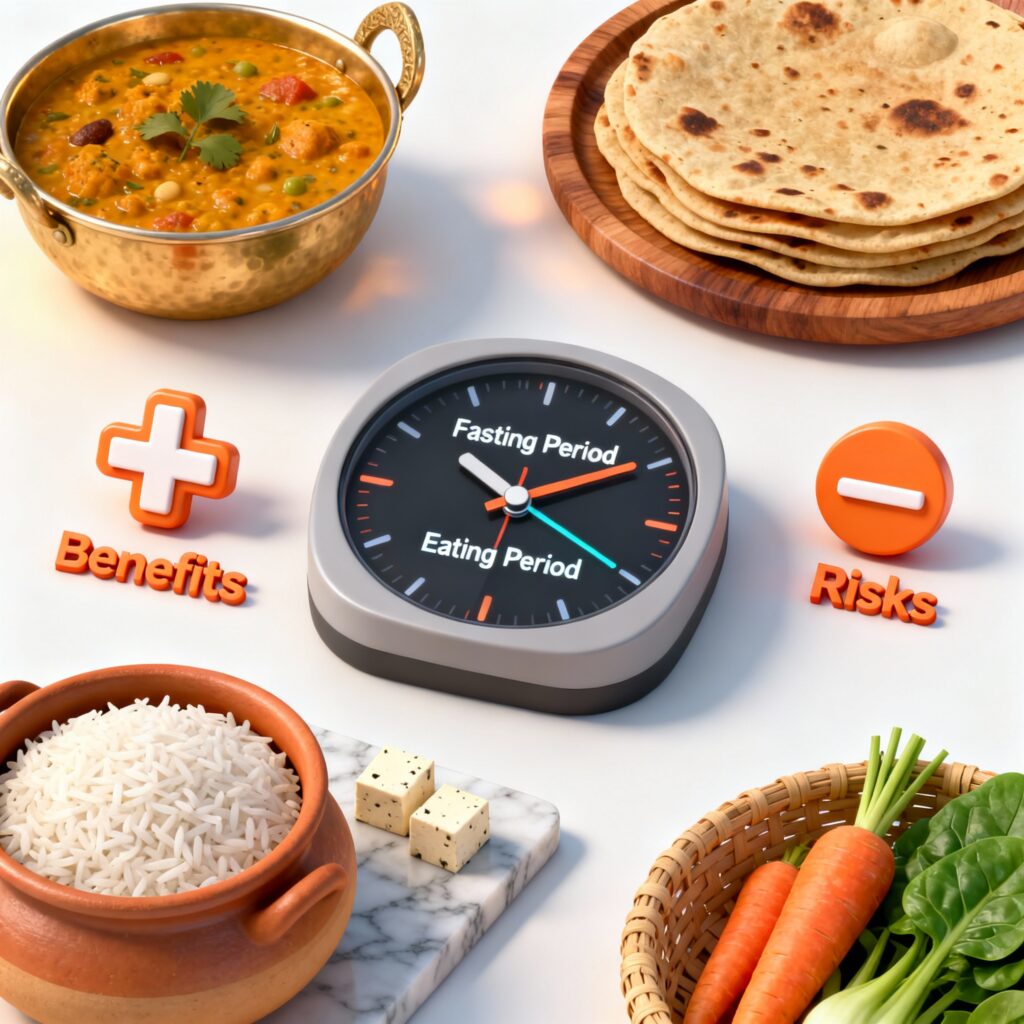
Intermittent fasting is not about what you eat, but when you eat. It involves eating during a fixed window (like 8 hours) and fasting for the remaining hours (like 16 hours). The most common patterns are 16:8, 18:6, or 5:2 fasting.
For example, in a 16:8 plan, you may eat between 12 pm and 8 pm, and fast from 8 pm to the next day at 12 pm.
🍛 Does Intermittent Fasting Suit Indians?
Yes, it can—but with a few cultural adjustments. Unlike Western diets, Indian meals often include carbs (rice, roti), spices, and oils. If done correctly, intermittent fasting can actually blend well with Indian eating habits.
- Morning tea/coffee habit: Replace sugar with jaggery or stevia, or try black coffee/herbal tea during fasting hours.
- Heavy dinners: Shift your largest meal to afternoon; keep dinner lighter with dal, sabzi, or soup.
- Snacking culture: Break the habit of unnecessary munching by eating nutrient-dense foods during eating hours.
⚡ Benefits of Intermittent Fasting for Indians
- Weight Management – Helps control calorie intake naturally.
- Improved Digestion – Gives your stomach time to rest.
- Better Blood Sugar Control – Can support people managing diabetes (under medical guidance).
- Boosts Energy & Focus – Many people report feeling more alert during fasting hours.
- Supports Traditional Fasting Culture – India already has age-old fasting rituals like Ekadashi, Navratri, and Karva Chauth, which align with IF principles.
⚠️ Things to Keep in Mind
- Not suitable for pregnant women, kids, or people with certain medical conditions.
- Avoid overeating oily or fried foods during eating windows.
- Focus on balanced meals: dal, roti, sabzi, rice, salads, nuts, and seasonal fruits.
- Stay hydrated with water, lemon water, or herbal teas.
🌟 Final Word
The truth is—intermittent fasting can work for Indians, but only if done mindfully. It’s not about skipping meals but about giving your body time to reset. Combine IF with traditional Indian wisdom—light dinners, seasonal fruits, and home-cooked meals—and you’ll see the best results.
💡 Pro Tip: Start slow. Try 12:12 (12 hours eating, 12 hours fasting) before jumping to 16:8. Listen to your body and adjust according to your lifestyle.